Pakistan’s tour of England has quickly turned into a major disappointment. After two Tests, England have taken an unassailable 2-0 lead, leaving Pakistan with plenty of questions to answer before the final Test at Edgbaston. The defeats at Headingley and Lord’s were not narrow losses; they exposed serious weaknesses in Pakistan’s batting, partnerships and ability to withstand sustained pressure.
The first Test at Headingley set the tone for a difficult series. England dominated Pakistan and secured a massive innings-and-103-run victory. Pakistan were dismissed for 171 in the first innings and 135 in the second, while England posted 409. The result gave England complete control and highlighted Pakistan’s inability to build a competitive total against a disciplined bowling attack.
Pakistan needed a strong response at Lord’s, but the second Test produced another heavy defeat. England were bowled out for 290 in their first innings, giving Pakistan an opportunity to take control. Instead, Pakistan collapsed for just 110. England then added 208 in their second innings, setting Pakistan a daunting target of 389. The visitors were eventually dismissed for 194, losing by 194 runs and surrendering the series 2-0.
The biggest concern for Pakistan is the batting. In four completed innings across the two Tests, the top order has struggled to produce the long partnerships required in Test cricket. There have been moments of individual resistance, but not enough collective batting to put England under serious pressure.
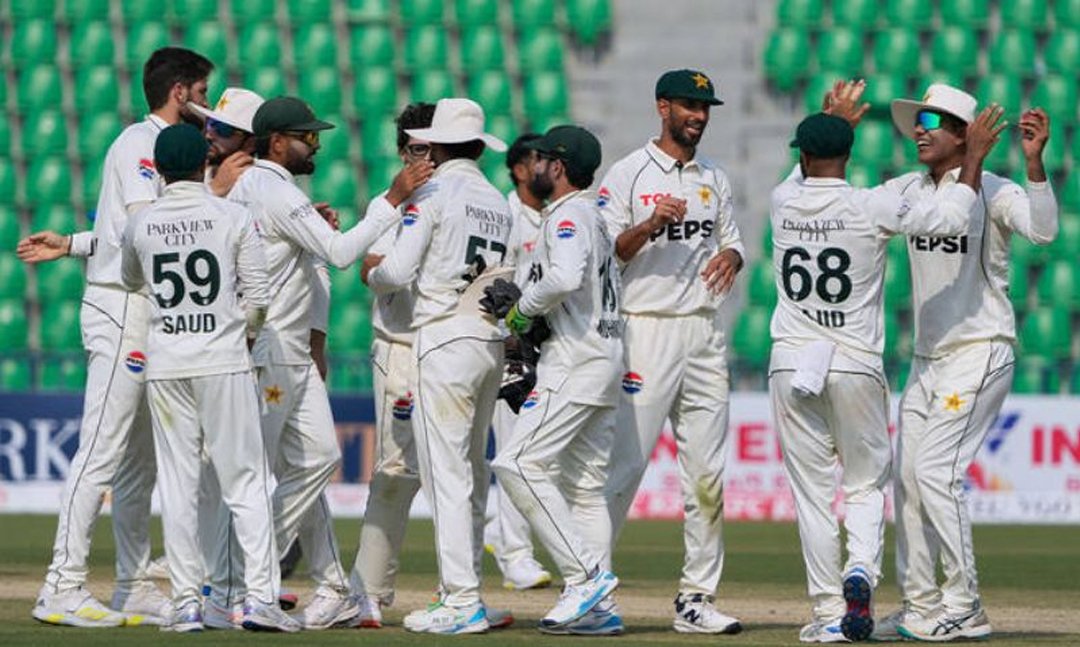
Saud Shakeel provided one of the brightest moments at Lord’s with a courageous 97 in Pakistan’s second innings. His innings showed the patience and determination Pakistan needed throughout the match. Unfortunately, his resistance was not supported for long enough at the other end.
There were positives with the ball as well. Mohammad Abbas produced an excellent performance at Lord’s, taking five wickets in England’s second innings. His accuracy and experience demonstrated that Pakistan’s bowling attack is capable of creating problems. However, good bowling performances cannot compensate for repeated batting collapses.
England, meanwhile, have shown exactly how Test cricket should be played in difficult conditions. Their bowlers have maintained relentless pressure, attacked Pakistan’s weaknesses and refused to allow easy scoring opportunities. Ollie Robinson has been particularly impressive, taking 8 wickets for 35 runs at Lord’s and continuing a remarkable run of form.Pakistan’s challenge now is bigger than simply avoiding a clean sweep. The team needs to identify why the same problems have appeared in two consecutive Tests. The final match at Edgbaston should be treated as an opportunity to rebuild confidence, give responsibility to players who can handle pressure and, most importantly, show greater discipline with the bat.
The series is already lost, but the tour is not over. Pakistan still have one Test remaining, and that match could determine whether this series ends as a complete collapse or becomes the beginning of a much-needed recovery.One thing is certain: Pakistan cannot afford another performance like the first two Tests. The final Test must be about character, discipline and a genuine fightback.