Navigating Tensions in the 2026 T20 World CupThe 2026 ICC Men’s T20 World Cup, co-hosted by India and Sri Lanka, was meant to be a celebration of cricket’s global appeal, uniting teams from across the world in a high-stakes tournament. However, as the event kicked off on February 7, it quickly became entangled in the geopolitical frictions of South Asia, highlighting how national rivalries and diplomatic disputes can overshadow the sport.
economist.com With the tournament now in full swing, the focus has shifted from potential boycotts to on-field action, though the scars of recent controversies remain visible.Bangladesh’s Withdrawal: A Cascade of Diplomatic FalloutOne of the most significant disruptions came from Bangladesh, whose cricket board (BCB) opted to withdraw from the tournament entirely. This decision stemmed from escalating political tensions with India, exacerbated by an incident involving Bangladeshi pacer Mustafizur Rahman. Rahman was released by his Indian Premier League (IPL) franchise, Kolkata Knight Riders, citing security concerns amid rising anti-Bangladesh sentiment in India following violent clashes and political unrest in Bangladesh.
ipag.org The BCB requested that their group matches be relocated from India to Sri Lanka, but the ICC rejected this, leading to Bangladesh’s boycott. In response, the ICC replaced Bangladesh—the world’s eighth-most populous nation and a growing force in cricket—with Scotland.
nytimes.comThis move has broader implications, including economic losses for broadcasters, sponsors, and fans, and it has raised alarms about India’s bid to host the 2036 Olympics. The International Olympic Committee (IOC) has expressed concerns over the politicization of sport, suggesting that such incidents could jeopardize India’s ambitions if governance appears influenced by national politics.
theguardian.com Critics argue that the ICC’s decision was swayed by the Board of Control for Cricket in India (BCCI), underscoring the power dynamics within global cricket administration.
espncricinfo.comThe fallout extended beyond the pitch: Bangladesh banned IPL broadcasts in retaliation, affecting advertisers and viewers, and illustrating how quickly sporting disputes can spill into cultural and economic realms.
ipag.org As a result, hundreds of millions of Bangladeshi fans have been deprived of participating in the World Cup, a loss lamented by many as a direct consequence of regional politics.
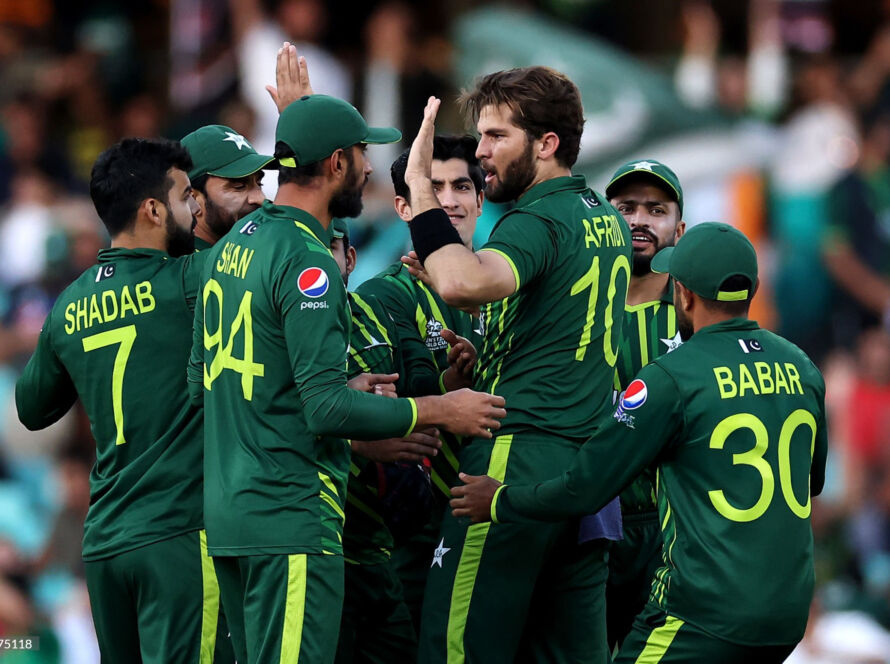
espn.comPakistan’s Boycott Threat and the High-Stakes ResolutionPakistan’s involvement added another layer of drama. In solidarity with Bangladesh and amid ongoing tensions with India—rooted in India’s refusal to tour Pakistan for the 2025 Champions Trophy—the Pakistan Cricket Board (PCB) initially announced they would boycott their crucial group match against India, scheduled for February 15 in Colombo.
aljazeera.com This decision, backed by the Pakistani government, was criticized by the ICC for “selective participation,” warning of long-term implications for Pakistan’s standing in international cricket.
bbc.comThe boycott threat echoed historical rifts, where cricket has often served as a proxy for Indo-Pakistani geopolitical strains.
thedailystar.net However, after intense behind-the-scenes negotiations involving the ICC, PCB, BCB, and Sri Lankan authorities, Pakistan reversed its stance.
aljazeera.com Former PCB chief Najam Sethi indicated that compromises were reached to avert massive financial losses for broadcasters and the ICC.
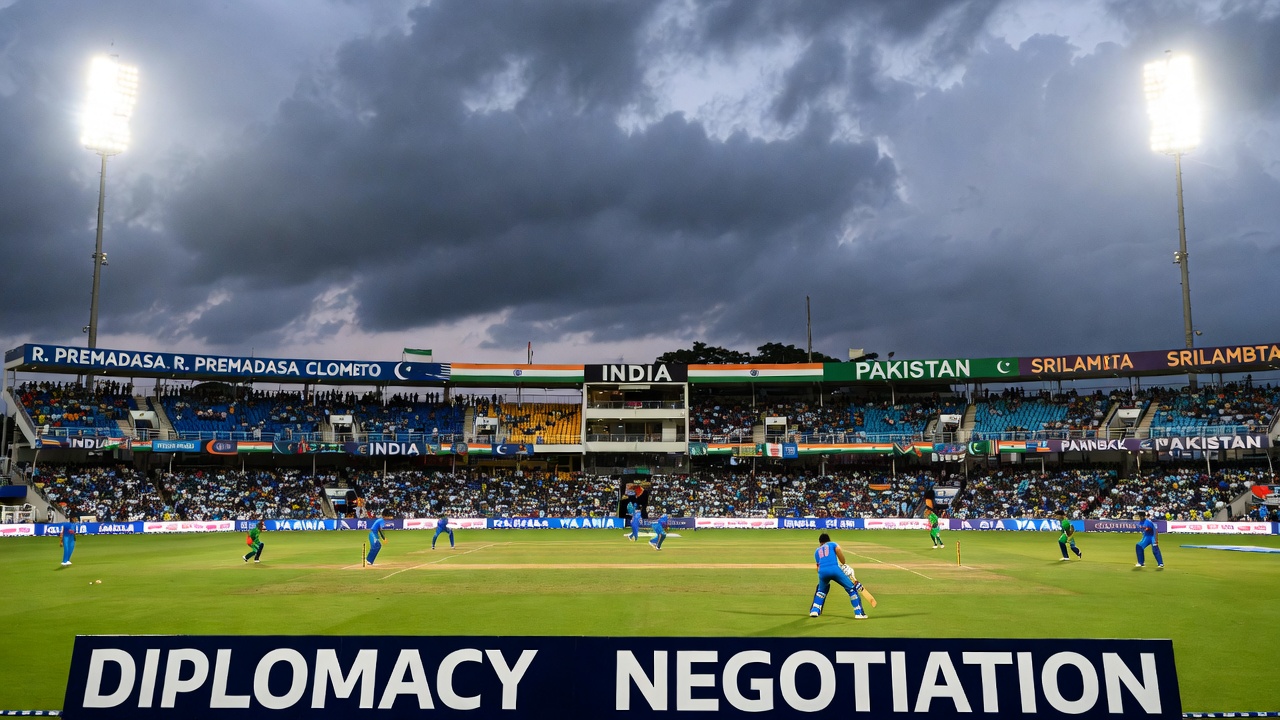
youtube.com As of February 14, the match is confirmed to proceed, with both teams preparing amid forecasts of rain at the R. Premadasa Stadium.
sports.ndtv.comLingering uncertainties persist, such as whether players will shake hands during the toss—a gesture that has been skipped in past encounters due to political sensitivities.
sports.ndtv.com Pakistan captain Salman Ali Agha has called for the game to be played in the “spirit of cricket,” while India’s Suryakumar Yadav remained non-committal on the handshake issue.
espn.com Both teams enter the clash undefeated, with India topping Group A after victories over the USA and Namibia, and Pakistan securing wins against the USA and Netherlands.
livemint.comBroader Implications: Weaponizing the Gentleman’s GameThese events underscore a troubling trend where cricket in South Asia is increasingly “weaponized” as an extension of geopolitics.
economist.com Former Pakistani cricketer Saqlain Mushtaq has warned that politics is eroding the sport’s unifying potential, urging its eradication to preserve cricket’s role in bridging divides.
timesofindia.indiatimes.com The ICC, often accused of favoring powerful boards like the BCCI, faces criticism for allowing such influences to dictate tournament integrity.
the-rambler.ghost.ioEconomically, the stakes are enormous: The India-Pakistan fixture is one of the most lucrative in sports, drawing billions of viewers and generating substantial revenue.
aljazeera.com Its near-cancellation highlighted vulnerabilities, but the resolution offers a glimmer of hope that diplomacy can prevail.Looking Ahead: Can Cricket Transcend Politics?As the tournament progresses, with the India-Pakistan showdown set to captivate audiences worldwide on February 15, there is a collective plea for the sport to rise above the fray.
espn.com While Bangladesh’s absence is a stark reminder of unresolved issues, the reversal of Pakistan’s boycott suggests that dialogue can mitigate crises. Ultimately, for cricket to thrive, stakeholders must prioritize the game over national agendas, ensuring that future tournaments are defined by athletic prowess rather than political maneuvering.
eurasiareview.com As fans tune in, the hope is that memorable moments on the field will provide a balm for the wounds inflicted off it.